Biography
David Inshaw paints pastoral images, more often than not imbued with a sense of mystery and emotional depth familiar from the early twentieth-century visions of Paul Nash, but rare in the landscape painting of today. He also paints figures, nude or clothed, with an evident relish and sense of celebration. His appreciation of the individuality of his models is manifest in these paintings, a human warmth and breadth of understanding that recalls Stanley Spencer, but with a new wit and impishness. Inshaw is very much his own man.
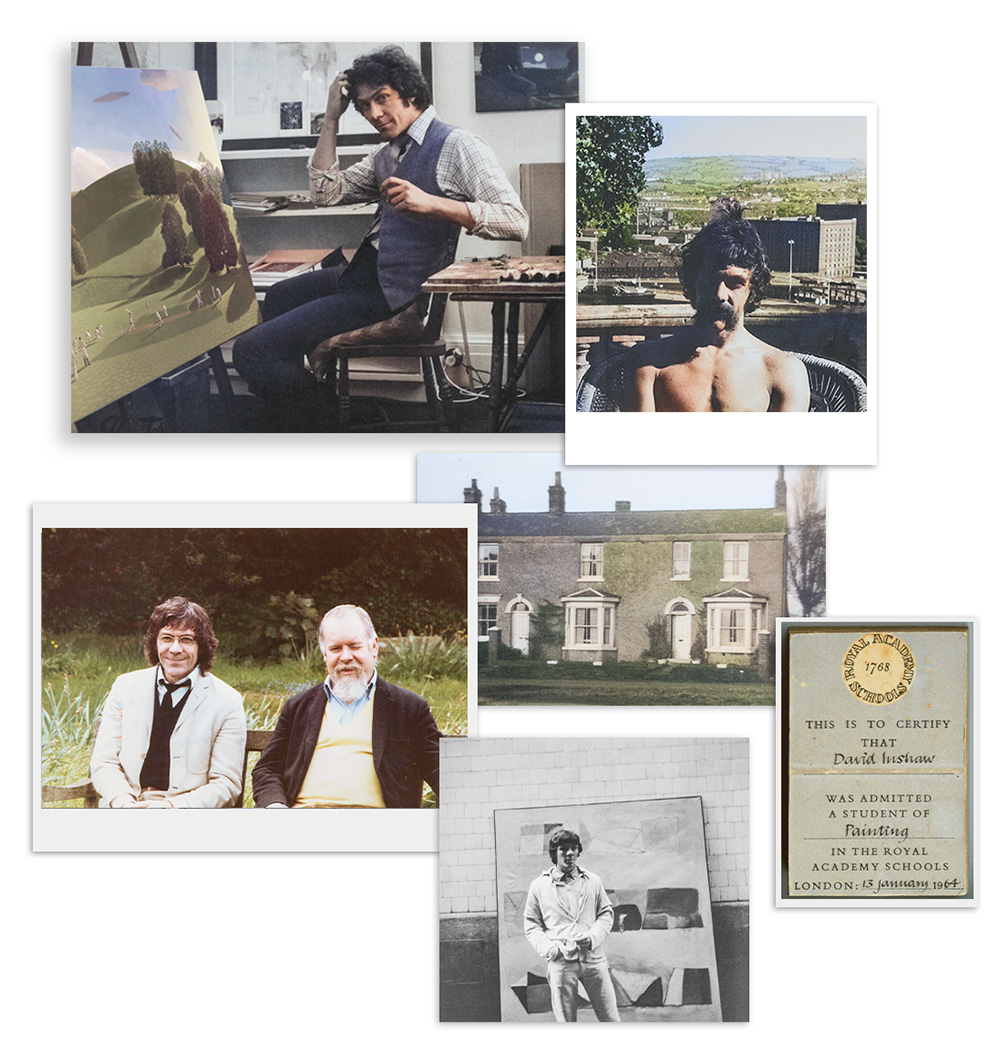
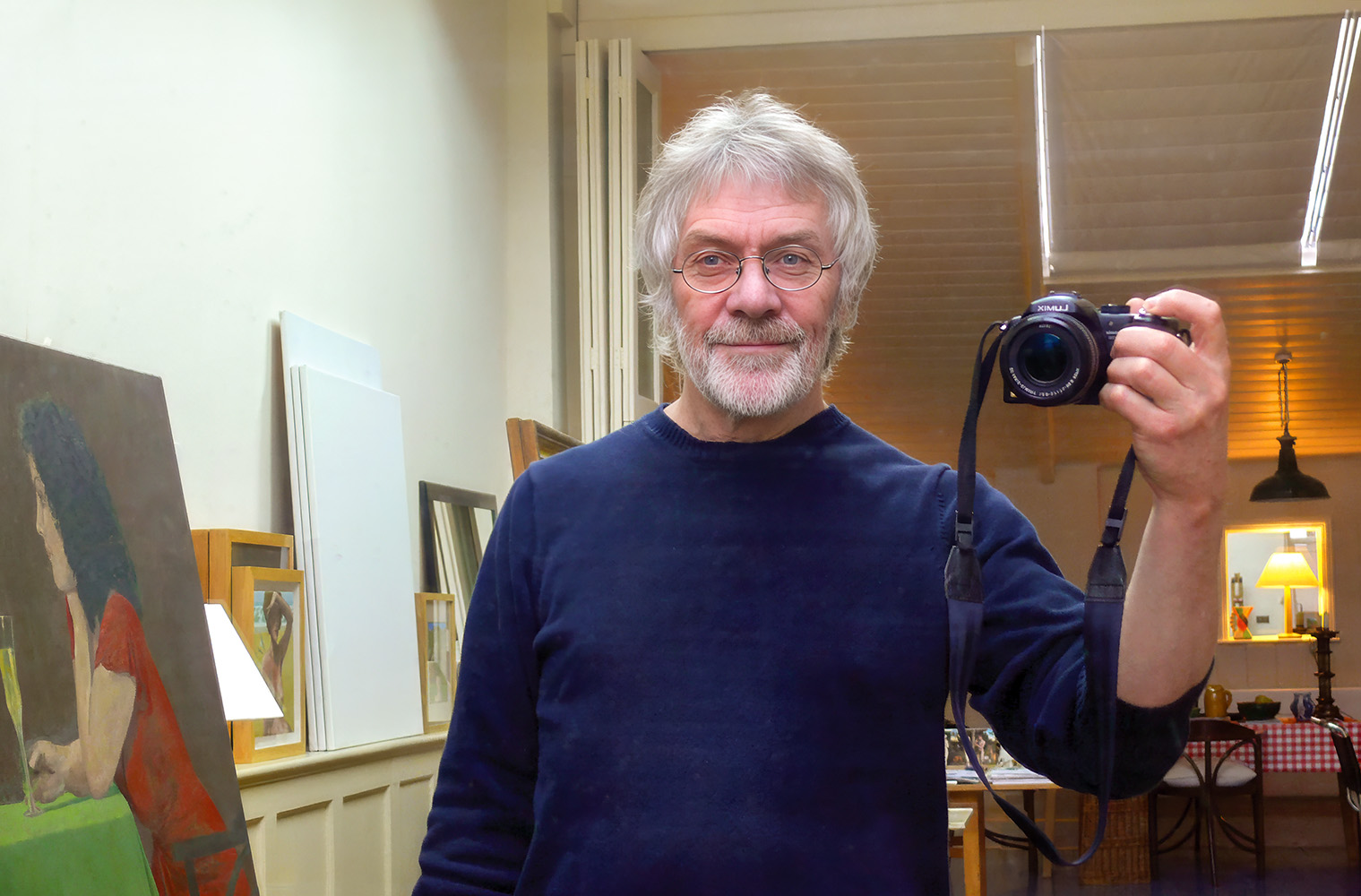
The garden historian Jane Brown has written: ‘On a certain kind of day, the English landscape takes on a David Inshaw look: it demands a summery brushiness of trees and usually comes with the clean, clear skies and long shadows of late afternoon.’ (Country Living, Feb 1988).
Roger Scruton, in England: An Elegy (2000), identifies the legend of England, the quintessence of place, as reappearing in Tippett’s Midsummer Marriage, the landscape poetry of Ted Hughes and the paintings of David Inshaw. These are high accolades.
‘No Man of Sense ever supposes that copying from Nature is the Art of Painting. If Art is no more than this, it is no better than any other Manual Labour: anybody may do it, and the fool will often do it best as it is a work of no Mind.’ So said William Blake, an uncompromising theoretician if ever there was one. Although Inshaw takes nature as his starting point, he is far from a slavish copier of it: he translates and transforms, and at his most successful, he transfigures. This book is an account of how he reached that eminence.
For David Inshaw, ideas mature slowly. His nature is in opposition to the instant gratification of today’s society, the nanosecond attention span and the constant surfing of too many choices. He works in an age-old tradition of art based on private experience and the particular character of the English landscape, which tends to focus on the scale of natural events and relationships between individuals. He has said: ‘I try I suppose to make my paintings have the lyrical qualities of music and poetry.’
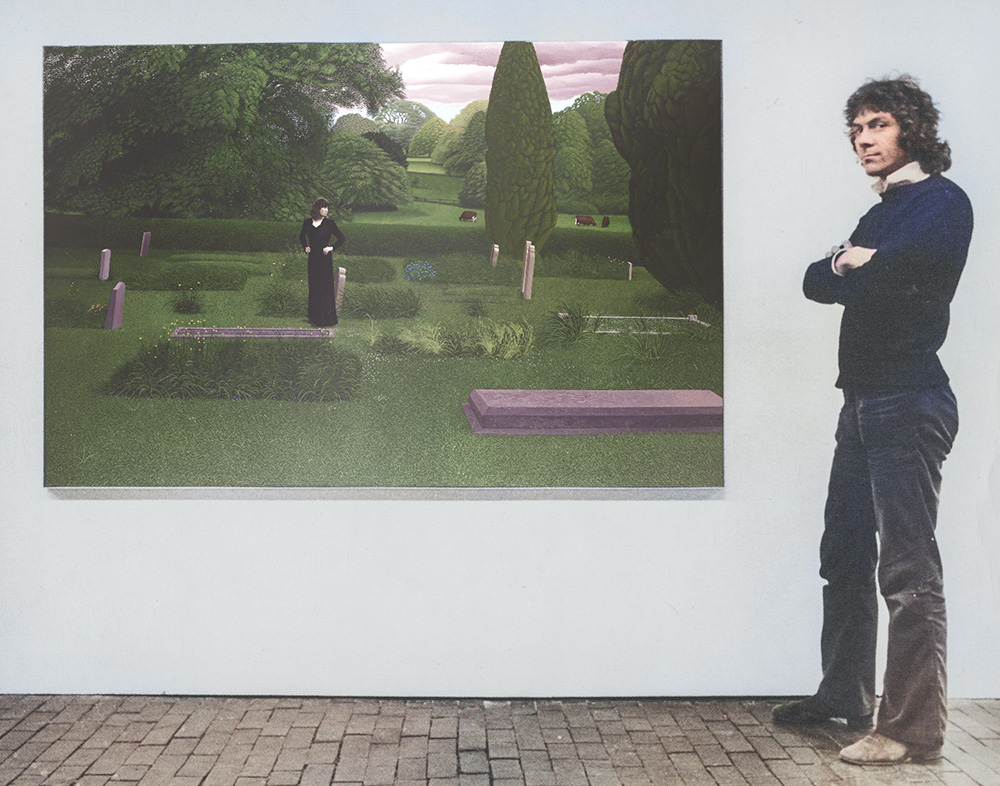
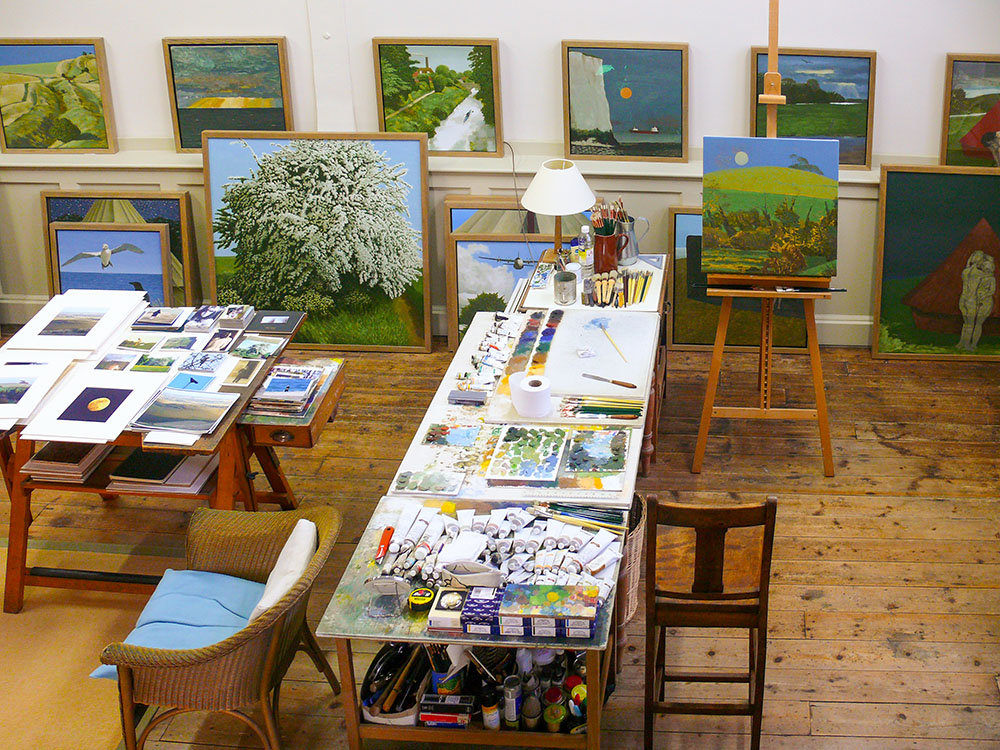
Inshaw’s friend, the poet Simon Rae, comments: ‘In painting after painting he evokes a world both recollected and projected, of intimation and provocative possibility rather than forthright exposition.’ He identifies Inshaw’s subjects as elusive moments of intense importance, and recognizes the sexual component – ‘the empathetic but unblinking curiosity’ shared with Inshaw’s hero, Stanley Spencer. Inshaw paints the female nude with frank enthusiasm and unfeigned delight. As he says: ‘I’ve always thought some kind of sensuality is necessary in painting.
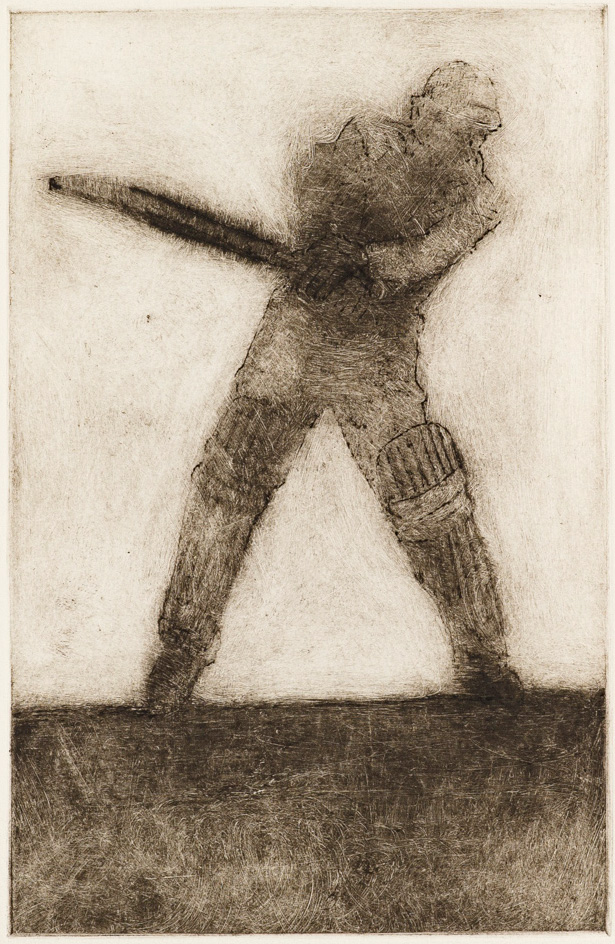
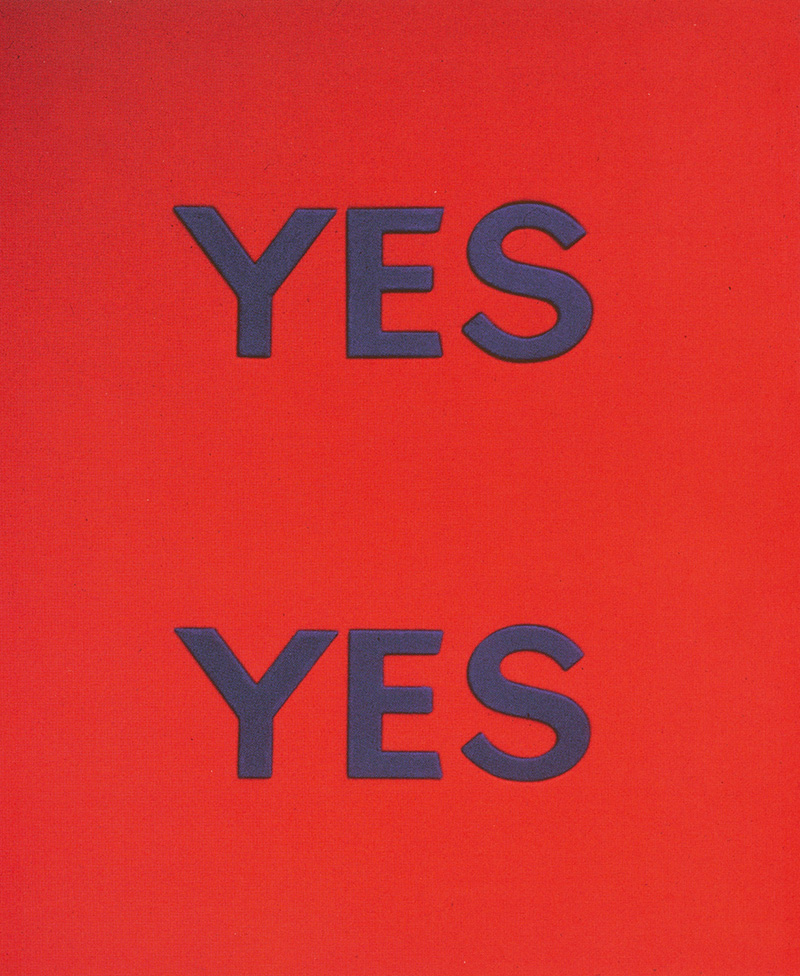
Memories and incidents are translated into the painting. ‘I’m always looking for symbols, images. I do tend to compose pictures based on experiences. Not just one experience – I tend to incorporate lots but put them all in their right place. Each painting has a story and they’re composed to take you around the painting. You can look at a painting any way you want but they are composed in a way to lead you into the story. Anyone looking at the painting can invent their own stories or try and figure out my stories.’
Inshaw collects images of all sorts – photographic, drawn, on film or video – and puts them together in his mind with music, the ambient sounds of a particular place and the souvenirs of events he has accumulated, in order for them to strike resonance from each other before they settle down to form a painting.
The sheer hard slog of painting should never be underestimated, whether it be Ben Nicholson patiently shaving away layers of board with countless fresh razorblades to make one of his immaculate reliefs, or David Inshaw adding increments of carefully modulated paint to a long-considered image. The technique, the craft of making, is very important to this kind of art, and has to be learnt. It is not just a question of being able to draw well, though this serves as a firm foundation for any further more painterly development, it is the clear necessity of thoroughly mastering a formal approach to picture-making, just as the surgeon must learn his particular business before we are entrusted to his knife.
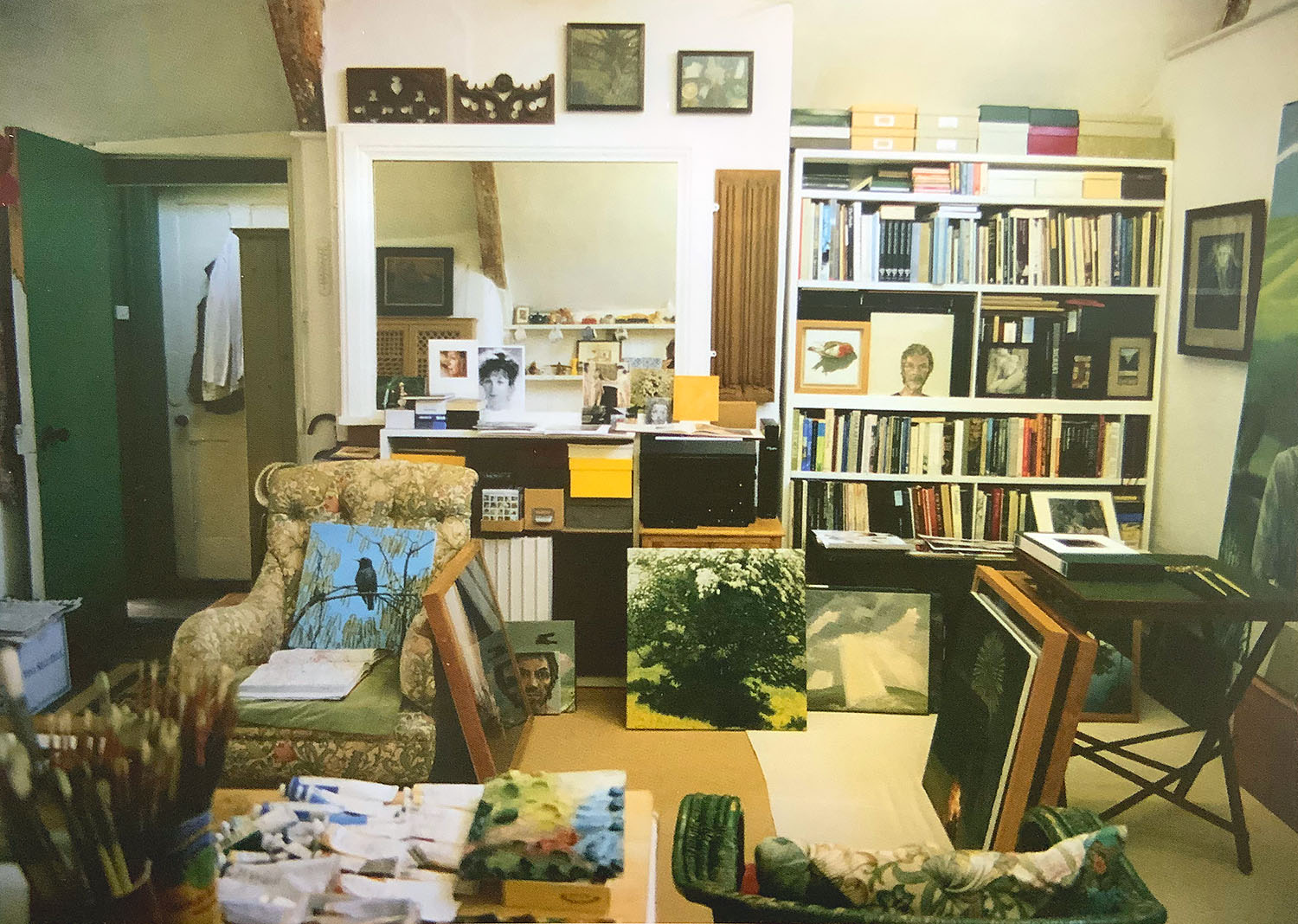
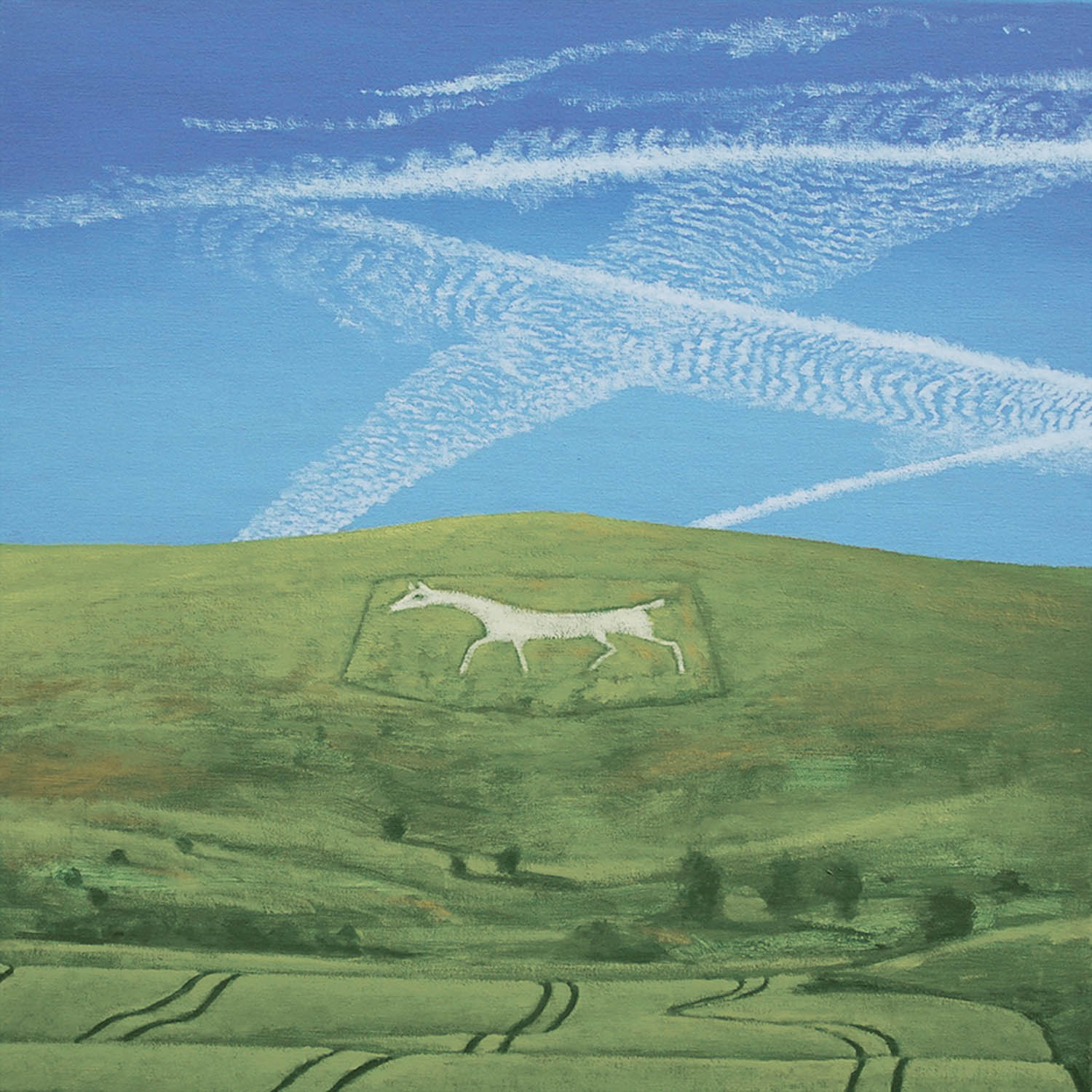
Of course, without imagination and vision, technique would be an empty drum and lnshaw has mastered technique not once but twice in his career so far. His early style, meticulously executed with small brushes, intricate and almost jewelled in its effects served him well for a decade before he began to find it too constricting. We change, we grow older, we mature. He sought a new freedom for his imagination which required a fundamental change of style, a loosening and broadening of the brushstroke without a concomitant loss of intensity.
His later style still has the quality of embedded imagery, the subject completely at one with the technique, that distinguished the early work, but the facture of the paint is different. His later paintings have more air in them, the surface texture is more open, the strokes and gestures he employs to evoke his subject are broader and more relaxed. But the relaxation is more apparent than actual, and formal unity remains. Only the means to this end have changed.
Quite often lnshaw’s work is spoken of as being mystical. He states: ‘Mystical is not a word I would use because I don’t really know what it means. People talk about the landscape around Wiltshire being mystical but to me the mysticism, if there is any, lies in the reality of the place. The spirit of place comes from you – you imbue a place with importance.
In Wiltshire, you can see the history of the landscape. When you look at it you can see traces of the past.
I was drawn to the chalk nature of this landscape.
I grew up in Kent on chalk downs so my early experiences were all based on that kind of landscape – the colours, the shapes, the vegetation, the birds, so I feel drawn to it.’
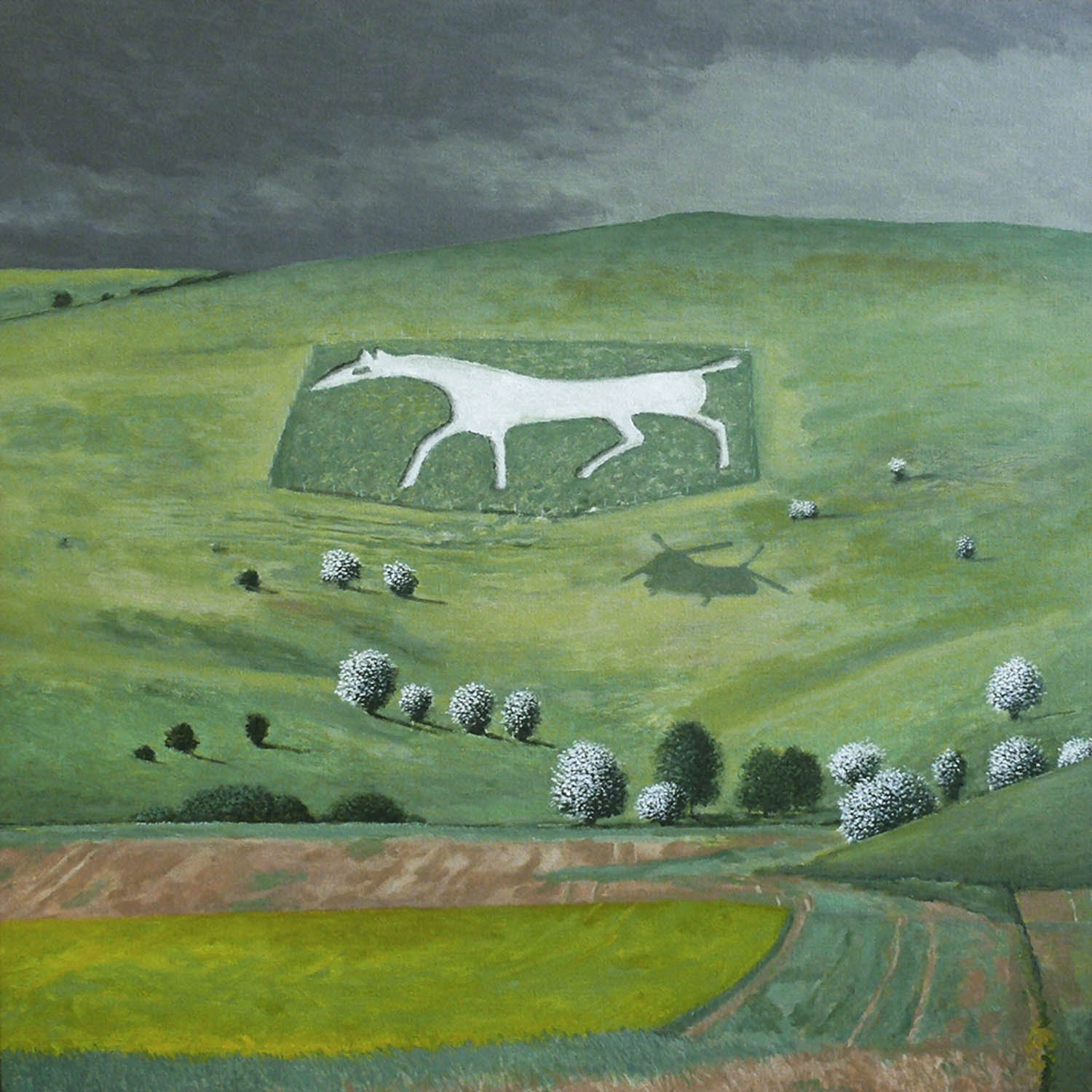
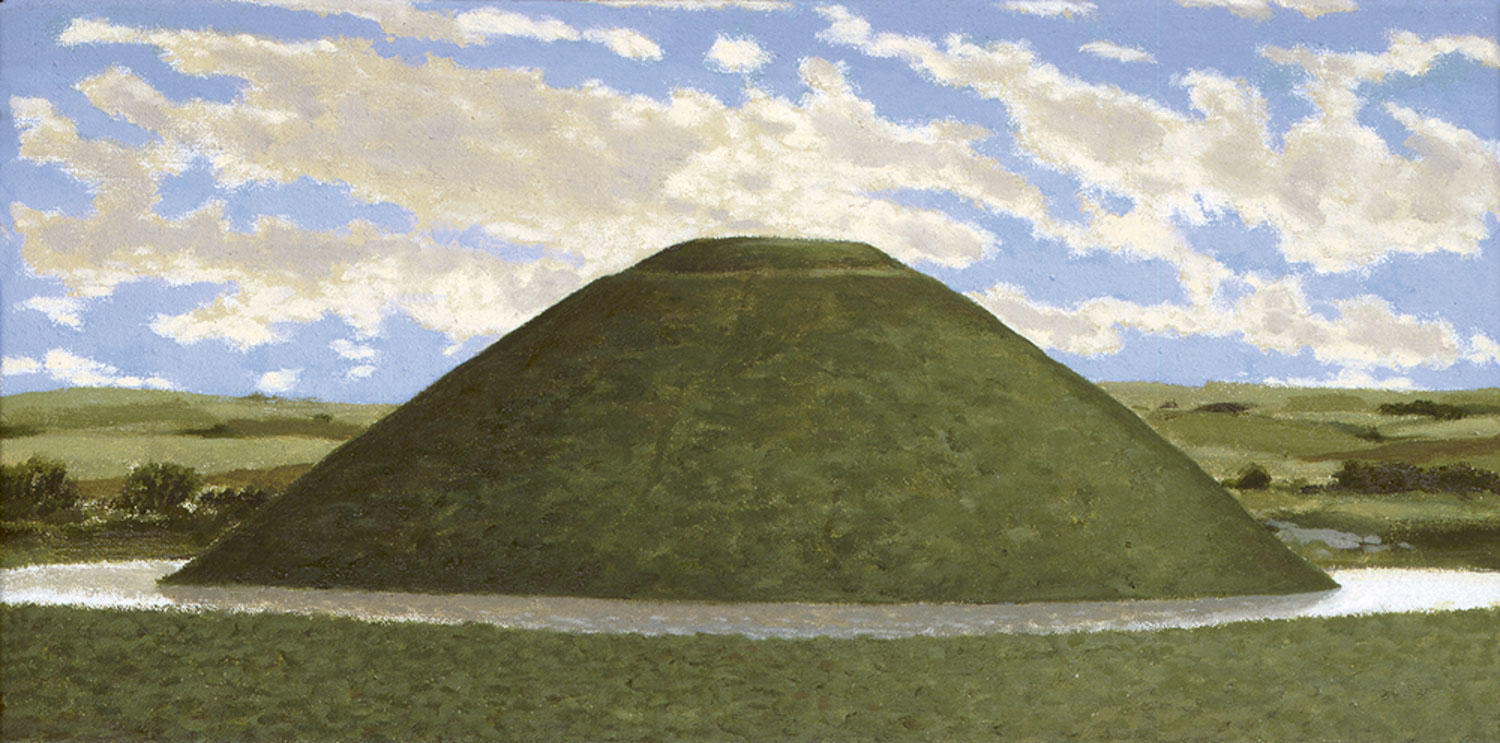
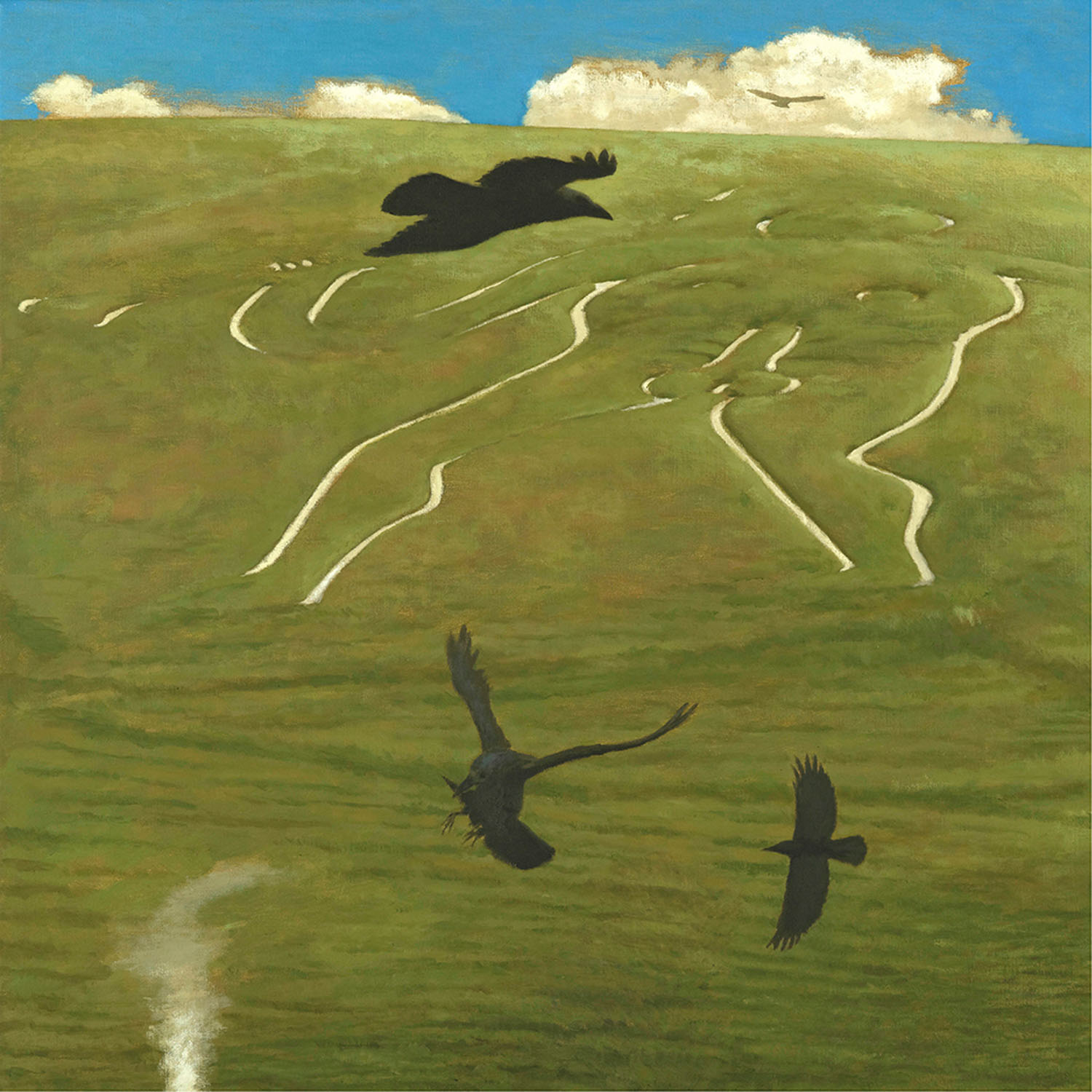
This is the landscape of white chalk figures and the Avebury stone circle, and these are subjects and motifs which appear and reappear in Inshaw’s work. He loves Silbury Hill, for instance, the man-made flat-topped mound on the Bath Road outside Marlborough, and even went inside it when it was last shored up against collapse.
‘I find Silbury Hill fascinating because it’s the same as it always was and yet it’s always changing. And the fact that men made it. They must have made it for a reason though we don’t know their purpose. It’s an anachronism in the landscape. But the scale of it is extraordinary.’
All these historical sites and landmarks have their own personal resonances for Inshaw. He has walked the Marlborough Downs with friends and lovers and witnessed these places in the varying light of dawn, dusk or midday, and with the emotional overlay of the variously charged moment.
Every painting he makes of this landscape will be imbued with memories which serve to make it an intensely-felt image, though its autobiographical nature need never be known to the viewer. Inshaw likes Thomas Hardy’s phrase ‘the beauty of associations is far superior to the beauty of aspect’.
Inshaw paints the beauty of aspect, but he brings to it an enriching beauty of association.
Introduction text by Andrew Lambirth, from David Inshaw: Between Fantasy and Reality (Tabretts Fine Art Ltd, 2010). Reproduced with permission.